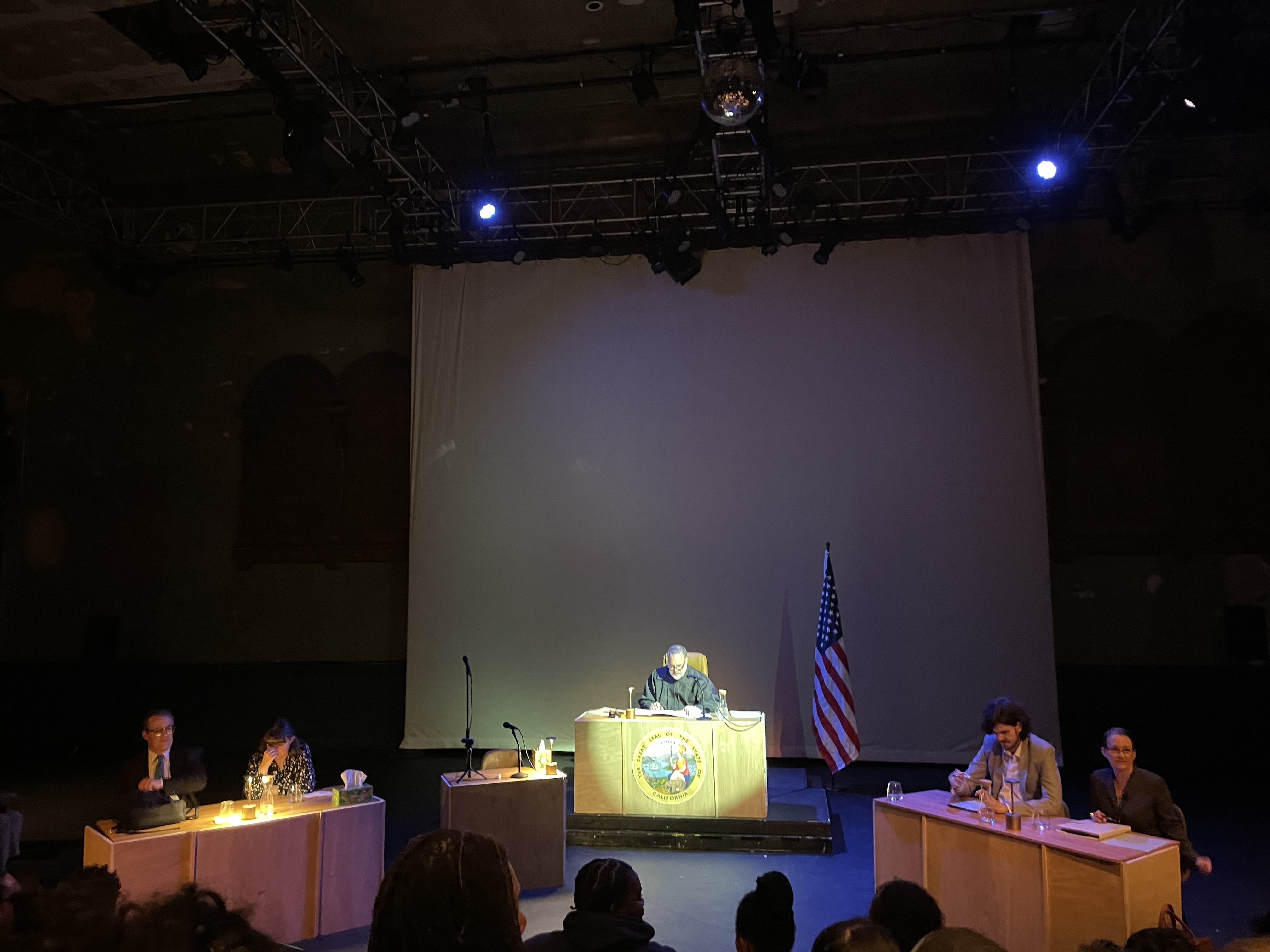
Last night, my boyfriend and I went to “The Jury Experience: An Immersive Courtroom Case.” As a lawyer, I’ve always known that serving on a jury in real life is highly unlikely for me. So, when my boyfriend suggested this show, my immediate answer was a resounding “yes.” We secured Zone A seats, arriving early to make sure we have central seats. (Tips: Early arrival allows you to choose your preferred seating within your zone.)
The show runs for a quick hour, shorter than many New York productions. The topic, a traffic accident involving a self-driving car and the ethical questions of AI, is definitely timely and thought-provoking. It discussed one of the complex issues that many lawyers are working on right now and made me think of the legal issue surrounding AI while watching the show. Though the prosecution actor lost the case in the show, I was amazed by his performance in particular as an audience member.
However, my legal background, while fueling my curiosity, also transformed me into a rather discerning “juror.” From the moment we entered, several details immediately struck me as not fitting with a genuine courtroom setting. The presence of water glasses on both the defense and prosecution tables, for instance, immediately raised a red flag. My inner litigator screamed, “What if a frustrated defendant shatters a glass?” This seemingly minor detail felt like a big mistake in courtroom design, leading to a mental “minus 5 points” for stage professionalism.
The immersive element, where audience members vote on key decisions via QR code, is a clever idea designed for engagement. Yet, it was during the second voting question that my lawyerly judgment truly kicked in. The question posed to the “jury” was: “Ladies and gentlemen of the jury, do you believe this evidence should be admitted into the record?” “My mind screamed: in a real court, whether evidence can be used is solely a judge’s decision, not the jury’s! This factual inaccuracy, while perhaps done for audience participation, felt like a significant misstep for a show aiming to make viewers feel like they are really in a courtroom.
Ultimately, while “The Jury Experience” tackles a fascinating and relevant legal problem, and the acting was engaging, I couldn’t help but feel that the playwright could have done more research into the law. For an audience genuinely interested in how a courtroom works, giving accurate procedural information is crucial. Perhaps there’s a good opportunity for lawyers and law students who also love theater—a new project to create shows that are both fun and legally correct!
“The Jury Experience” offers an interesting look for those who haven’t or will never have the chance to be a juror. However, my personal hope is that such a show could aim to do more: to truly help people understand their civic duty and learn more about the legal system. Otherwise, presenting incorrect procedures, even for entertainment, carries a certain risk. As a foreigner, I know this is an outside view, but it’s a real observation.